
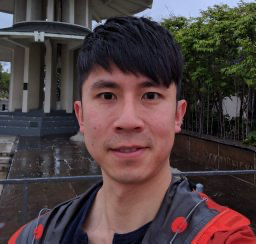


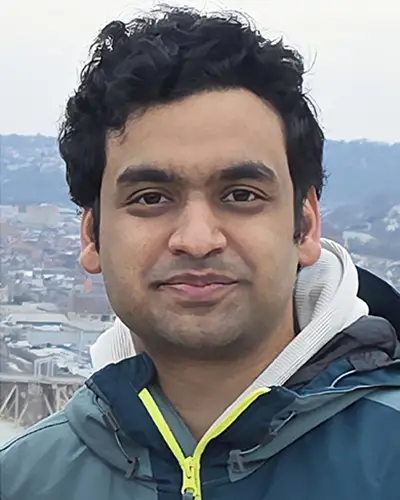

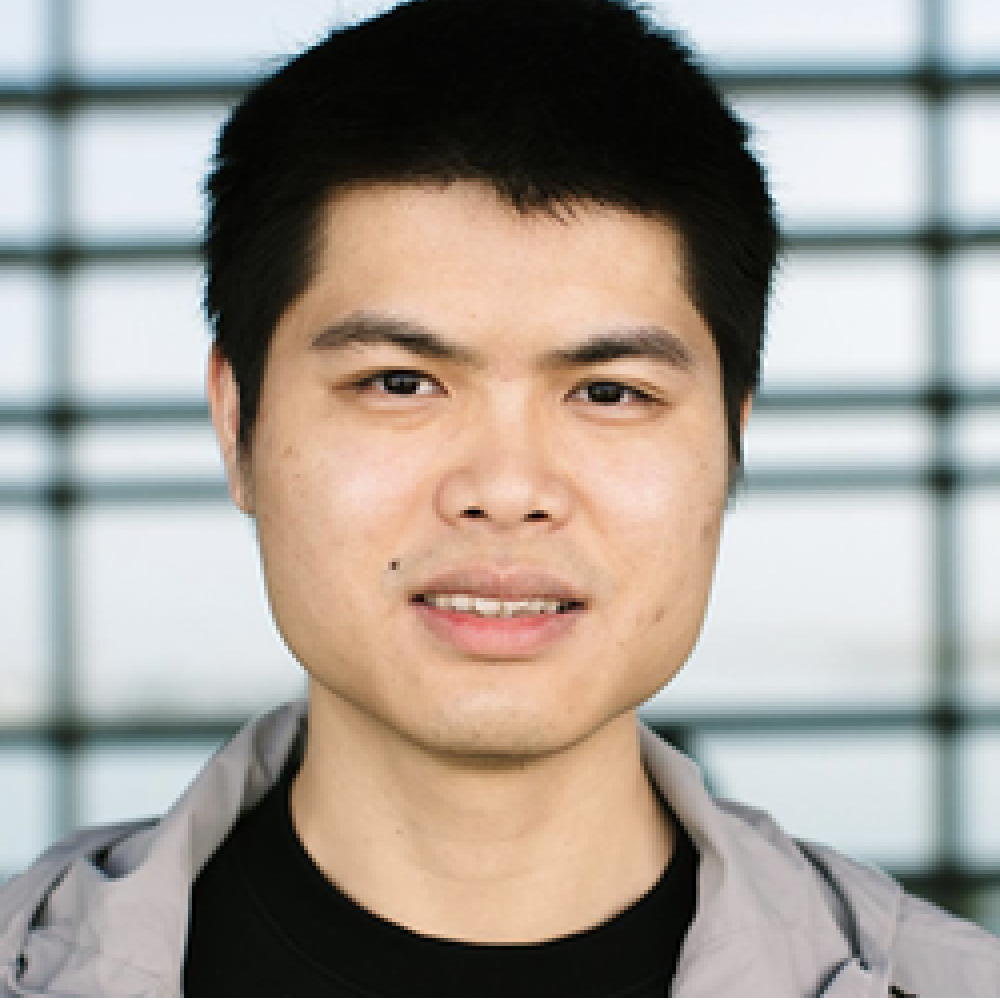
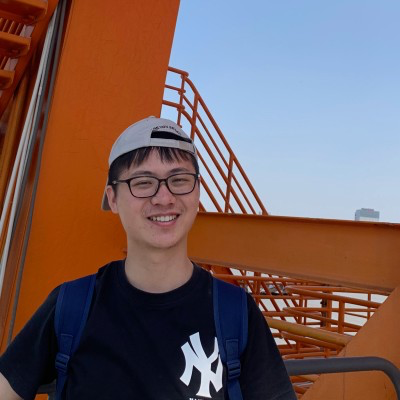




- Guohao Li (Co-Lead): guohao.li@eigent.ai
- Qijia Shen (Co-Lead): qijia.shen@eigent.ai
Scaling Environments for Agents (SEA)
The Second SEA Workshop @ ICLR 2027
Scaling Environments for Training, Evaluating, and Evolving Large Language Model Agents
Date: April 29 or 30, 2027 (day to be assigned by ICLR) | Location: San Francisco, California, USA
An agent environment defines the interaction interface, state transitions, and feedback loop through which a large language model (LLM) learns agentic behavior via multi-turn reinforcement learning (RL). Unlike supervised fine-tuning on fixed, off-policy trajectories, environment-based RL allows agents to learn from their own interactions and outcomes. Recent advances in RL with verifiable rewards (RLVR) have shown that this paradigm can push agents beyond the capabilities captured by demonstration data and improve generalization to novel tasks. However, LLM-based agent training remains an emerging field, and scaling it requires more than simply moving from single-turn to multi-turn rollouts: it requires reliable large-scale interaction through concurrent tool execution, sandboxing, state management, and efficient rollout generation, as well as diverse environments with trustworthy verifiers and reward signals. These challenges motivate research on environment synthesis, automatic curricula, and self-evolving environments, while raising several central questions: How can environments scale across domains such as science, coding, office work, terminal and GUI interaction, embodied control, and multi-agent collaboration, while also supporting increasingly complex and long-horizon tasks? How can tasks, rewards, and verifiers be generated and adapted automatically? And how can reliable supervision be maintained while avoiding reward hacking, spurious shortcuts, and brittle evaluation protocols?
Topics of Interest
Scaling Environments for Agents
We are particularly interested in research that treats agent environments as first-class citizens. Topics include, but are not limited to:
1
Environment Design and Benchmarking
Task and environment design, benchmark construction, curriculum design, reward
and verifier development, and evaluation robustness.
2
Self-Evolving Environments, Harnesses, and Agents
Agent-environment co-evolution; self-improving harnesses; open-ended learning;
task and environment synthesis.
3
Environment and Rollout Infrastructure
Scalable and reliable rollout generation, concurrent tool execution, sandboxing,
state and context management, fault tolerance, observability, reproducibility, and integration with
agent training systems.
4
Terminal and Software Engineering Environments
Long-horizon environments for code generation, debugging, repository-level
software engineering, terminal use, and system administration.
5
GUI, Multimodal, and Embodied Environments
Browser, desktop, and mobile interaction; multimodal perception and action;
robotics, simulation, and sim-to-real transfer.
6
Scientific Discovery and Autonomous Research Environments
Environments for experimentation, hypothesis generation, scientific workflows,
and autonomous discovery in domains such as biology, chemistry, and materials science.
7
Multi-Agent and Social Environments
Shared environments for cooperation, competition, negotiation, coordination,
population-based learning, and multi-agent training.
8
World Models and Learned Environments
Learned environment dynamics and simulators for agent training, including
fidelity, controllability, grounding, model bias, and transfer between learned, programmatic, and real
environments.
Call for Papers
Scaling Environments for Agents
Submission Tracks
We invite contributions in the Topics of Interest; the topic list is not exhaustive and we welcome submissions in related areas. There are two tracks (page limits exclude references and supplementary material):
- Short papers (up to 4 pages): preliminary findings, implementations and evaluations of simple unpublished ideas, follow-up experiments or re-analyses of published work, position papers, benchmark analyses, infrastructure reports, and negative results. This track is intended to be accessible to authors outside the ML conference publication circuit.
- Long papers (up to 9 pages): mature, full-length contributions with more extensive technical development, experiments, or analysis.
Submission Guidelines
Submissions will be managed through OpenReview; the submission link and formatting instructions will be posted here with the call for papers. All accepted papers are non-archival. We prioritize ongoing and novel work; the workshop will not primarily re-present papers already published at major conferences.
Accepted papers will be presented in poster sessions. We will additionally select 12 contributed lightning talks and one Best Paper Award.
For participants unable to travel because of visa issues or other exceptional circumstances, we will offer prerecorded presentations on the website, arrange poster display by a local representative, and collect asynchronous questions for discussion.
AI Usage Policy
Submissions must be primarily human-authored, and reviews and acceptance decisions will be the responsibility of human reviewers and organizers. AI-generated papers are not permitted in the short-paper track. AI assistance is permitted, with authors responsible for accuracy, originality, and appropriate disclosure of substantive assistance. AI will not serve as a primary author or reviewer. Reviewers must preserve submission confidentiality and must not upload confidential manuscripts to external AI services.
Important Dates Tentative
| Call for Papers | |
| Paper Submission Deadline | |
| Notification of Acceptance | |
| Workshop at ICLR 2027 |
Invited Speakers and Panelists
Scaling Environments for Agents
Invited Speakers
Rishabh Agarwal
Periodic Labs & McGill

Saining Xie
AMI Labs & NYU Courant

Rohan Anil
Core Automation

Jeff Clune
Recursive, UBC & Vector Institute

Ross Taylor
General Reasoning

Rulin Shao
University of Washington & Meta
Panelists
Schedule Tentative
Scaling Environments for Agents
Times are local to the conference venue and subject to venue scheduling.
| Time | Session | Duration |
|---|---|---|
| 08:00 - 08:05 | Opening Remarks | 5 min |
| 08:05 - 08:35 | Lightning Talks I | 30 min |
| 08:35 - 09:20 | Invited Talk 1 | 30 min + 15 min Q&A |
| 09:20 - 10:05 | Invited Talk 2 | 30 min + 15 min Q&A |
| 10:05 - 10:35 | Morning Break | 30 min |
| 10:35 - 11:20 | Invited Talk 3 | 30 min + 15 min Q&A |
| 11:20 - 13:50 | Lunch, Posters & Demos | 150 min (30 min lunch + 120 min posters & demos) |
| 13:50 - 14:20 | Lightning Talks II | 30 min |
| 14:20 - 14:50 | Invited Talk 4 | 20 min + 10 min Q&A |
| 14:50 - 15:20 | Invited Talk 5 | 20 min + 10 min Q&A |
| 15:20 - 15:50 | Afternoon Break | 30 min |
| 15:50 - 16:20 | Invited Talk 6 | 20 min + 10 min Q&A |
| 16:20 - 17:20 | Panel Discussion | 60 min |
| 17:20 - 17:30 | Awards & Closing | 10 min |
The panel will use questions collected from participants to discuss environment scaling, verifier reliability, and reproducibility. An open problems wall will collect attendee input throughout the day; organizers will publish a short summary after the workshop.
Contact
Scaling Environments for Agents